
The Quantum Threat to Your Data Is Already Happening: You Just Won’t See It Yet
Here’s the uncomfortable part about quantum computing: an attacker doesn’t need a quantum computer today to put some of your data at risk.
Read more
When a gift card is compromised on the shelf, the financial loss is immediate — but the long-term damage to retail trust and impulse purchasing is far worse.
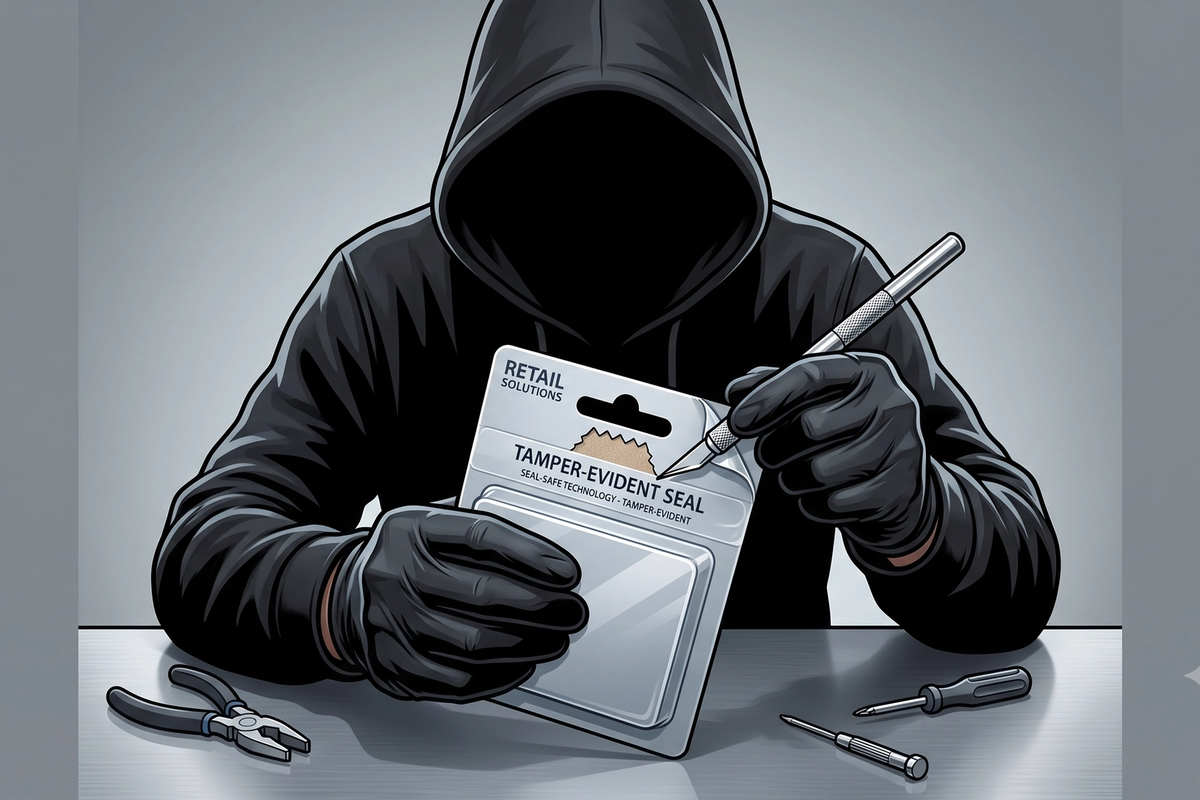
When a gift card or open-loop prepaid card is compromised on the shelf, the immediate loss is financial. But for a retailer, the long-term damage is psychological.
Gift cards are uniquely tied to emotional transactions—they are primarily bought as rewards, expressions of gratitude, or holiday gifts. When a consumer buys a tampered card, the fraud doesn't trigger immediately. Instead, it lies dormant like a hidden landmine until the gift is unwrapped. When the recipient tries to redeem it and discovers a $0 balance, a devastating friction point occurs:
Retail tampering is a serious business, draining an estimated $500 million annually in the US alone. Organized Retail Crime (ORC) syndicates use a multi-step "draining" pipeline to compromise cards right on the shelf:
To fight this threat, the industry has locked itself into a losing packaging arms race. Manufacturers constantly alter the physical packaging to make it more "secure"— deploying zigzag cuts, tamper-evident seals, and fiber-reinforced tabs to protect the data payload.
But the hard truth in 2026 is that none of it has worked. Fraudsters simply alter their own tactics in tandem, using highly sophisticated tools, heat sources, and specialized adhesives to cleanly thwart every new physical barrier we throw at them. Because this packaging defense keeps failing, strict state compliance mandates are stepping in, threatening to force cards off the open floor entirely—a move that would completely destroy this high-impulse retail category.
Stripping the Surface: How Numberless Cards Protect Floor Inventory
We cannot afford to change how we merchandise these cards, so we must change what we merchandise. The definitive tactical shift is the integration of numberless payment cards —physical cards issued with no PAN, expiration date, or CVV printed on the plastic.
By removing the static data payload from the surface entirely before it ever hits the J-hook, numberless architecture completely dismantles the tampering pipeline:
Numberless tech stops the fraud without sacrificing the open-floor merchandising we built twenty years ago.
Coming up next in Blog 3: Lane Dynamics. We will dive into how retailers can authenticate these secure, numberless stacks without adding a single second of friction to the checkout lane.
More insights on payments, fintech, and strategic consulting
Here’s the uncomfortable part about quantum computing: an attacker doesn’t need a quantum computer today to put some of your data at risk.
Read more

Fraudsters don’t necessarily need to guess a password. They can use credentials that already work. A system built primarily to flag the wrong password has very little to flag when the password is correct.
Read more

On August 5, MoneyPass stopped being part of Fiserv and became an independent company. That is a pretty significant change for a network with more than 37,000 surcharge-free ATMs and 160 million cardholders.
Read more

The conversation around retail-acquired card fraud often focuses on the consumer who loses money or the retailer dealing with a frustrated customer. But the financial impact reaches much farther across the ecosystem.
Read more

E&S Consulting delivers data-driven strategies to enhance your decision-making, minimize operational risk, and cultivate the partnerships necessary for long-term success.